Have you ever stopped mid-sentence and asked yourself: is it “labeled” or “labelled”? You are not alone. Many people type this question into Google every month. Both words look right. Both appear in books, news, and on product boxes. So which one is correct?
People search for this keyword for simple reasons. A student wants a good grade on an essay. A worker wants to send a clean email. A writer wants to look sharp to readers in another country. A spell checker may flag one spelling, and that adds to the doubt.
Here is the good news. Both spellings are correct. The difference comes from where you live and who reads your work. One is American. The other is British.
This guide clears up the confusion. You will get a quick answer, a short history, clear rules, and real examples. You will also see common mistakes, usage trends, and a simple FAQ. By the end, you will know which spelling to pick every time.
Quick Answer
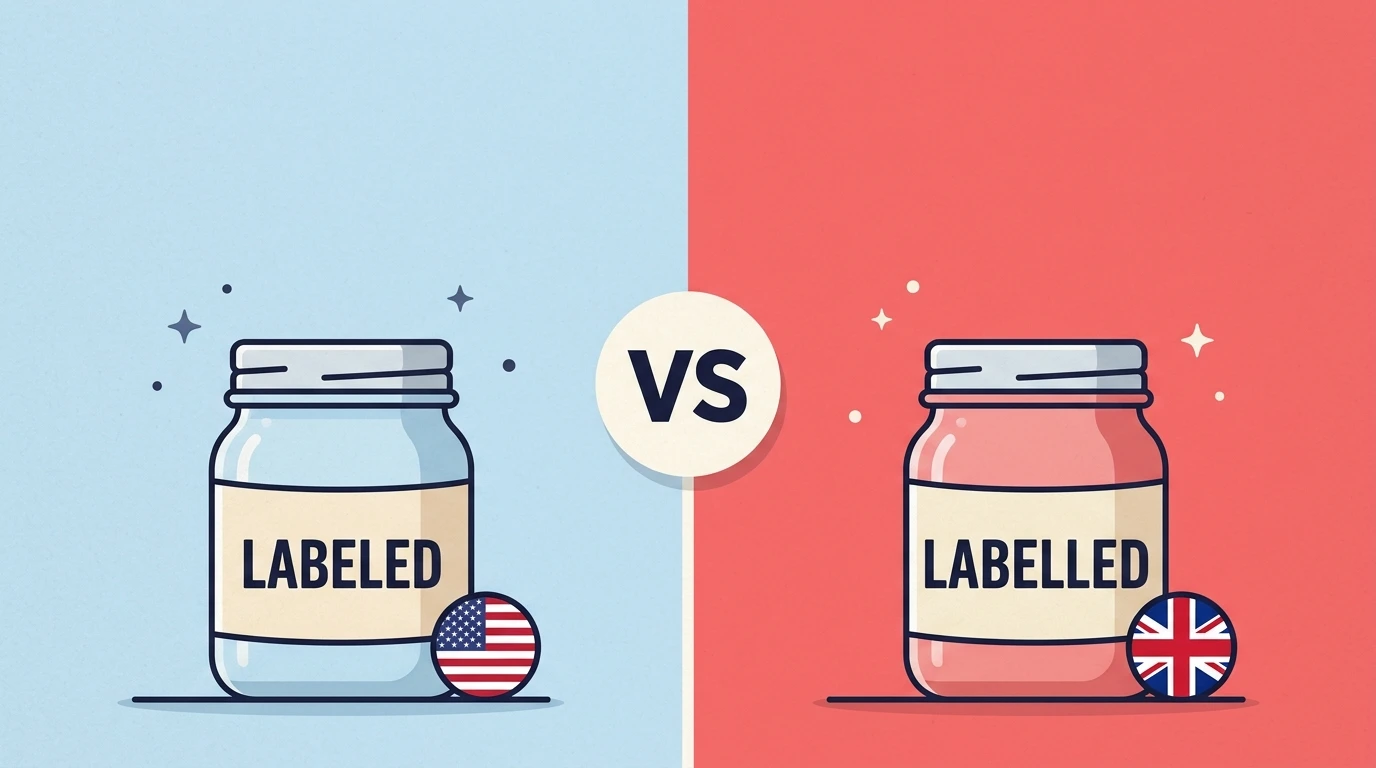
Labeled (one L) is the American English spelling.
Labelled (two Ls) is the British English spelling.
Both mean the same thing: to put a label on something, or to call something by a name or type.
Examples:
- US: The teacher labeled each box.
- UK: The teacher labelled each box.
- US: Critics labeled the film a hit.
- UK: Critics labelled the film a hit.
The same split applies to the ing form. Americans write “labeling.” Britons write “labelling.” The noun is always “label,” with one L, in both.
Short rule: Writing for the US? Use labeled. Writing for the UK, Australia, India, or most of the Commonwealth? Use labelled.
The Origin of Labeled and Labelled
The word “label” came into English from Old French. It first meant a thin strip or ribbon. Later, people used these strips to attach notes to objects. That is how the word got its modern meaning.
Over time, “label” became a verb. To label something meant to add a tag or a name to it. When English speakers added -ed or -ing, a spelling question appeared. Should the last letter be doubled?
British English kept the old habit. It doubles the final L when adding endings. That gives us “labelled” and “labelling.”
American English changed. In the early 1800s, Noah Webster, a famous American dictionary maker, pushed for simpler spellings. He wanted fewer extra letters. His ideas shaped American spelling, and that is why “labeled” became standard in the US.
So the difference is not a mistake. It is history. Two groups of English speakers took two paths.
British English vs American English Spelling
The rule is easy to see once you know it. British English usually doubles a final L after a vowel, even when the last syllable is not stressed. American English usually does not double it.
This same pattern shows up in many other words:
| Base word | American English | British English |
| label | labeled / labeling | labelled / labelling |
| travel | traveled / traveling | travelled / travelling |
| model | modeled / modeling | modelled / modelling |
| cancel | canceled / canceling | cancelled / cancelling |
| level | leveled / leveling | levelled / levelling |
| signal | signaled / signaling | signalled / signalling |
| counsel | counseled / counseling | counselled / counselling |
Two things to remember:
- The noun stays the same. It is “label” everywhere.
- Some words are mixed. In the US, “cancelled” is also common, even though “canceled” is the usual pick in style guides.
Which Spelling Should You Use?
Pick the spelling that fits your reader. Here is a simple guide.
Writing for a US audience: Use labeled and labeling. This is the standard in American schools, news, and business.
Writing for the UK or the Commonwealth: Use labelled and labelling. This includes the UK, Australia, New Zealand, India, South Africa, and Ireland. Canada mostly leans toward labelled, but you will see both there.
Writing for a global audience: Choose one and stay with it. Many global brands pick American spelling because of the large US market. Others pick British spelling because it is widely taught around the world. Both are fine.
Other tips:
- Check your school or company style guide first.
- Set your spell checker to the right language, such as English (US) or English (UK).
- Never mix the two in one document.
Common Mistakes with Labeled and Labelled
Mistake 1: Mixing spellings in one text.
- Wrong: We labeled the files, and then labelling the boxes took an hour.
- Right: We labeled the files, and then labeling the boxes took an hour.
Mistake 2: Doubling the L in the noun.
- Wrong: Read the labell on the bottle.
- Right: Read the label on the bottle.
- A UK reader may think “labeled” is a typo. A US reader may think “labelled” is a typo. Match your reader.
- Wrong: The jar was labled.
- Right: The jar was labeled (US) or labelled (UK).
- If the language setting is wrong, the tool will flag the correct word for your audience.
Labeled and Labelled in Everyday Examples
In emails
- US: Please make sure all files are labeled by Friday.
- UK: Please make sure all files are labelled by Friday.
In news headlines
- US: Police say the package was labeled “fragile.”
- UK: Police say the package was labelled “fragile.”
On social media
- US: Just labeled all my spice jars. So satisfying!
- UK: Just labelled all my spice jars. So satisfying!
In formal writing
- US: Participants were labeled as Group A or Group B.
- UK: Participants were labelled as Group A or Group B.
In product text
- US: All items must be clearly labeled with the contents.
- UK: All items must be clearly labelled with the contents.
Google Trends & Usage Data
Search tools such as Google Trends show how often people look up each spelling. Here is the general pattern, without exact numbers:
- United States: People mostly use and search “labeled.”
- United Kingdom, Australia, New Zealand, India, South Africa, and Ireland: People mostly use and search “labelled.”
- Canada: Both appear, with a lean toward “labelled.”
Context matters too. “Labeled” is very common in tech, data science, and machine learning, such as “labeled data.” This is partly because many tech companies are based in the US. “Labelled” is common in UK news, shop signs, and government notices.
Because the US has a large online audience, “labeled” often gets more total searches worldwide. Still, “labelled” is strong in many countries. You can check current numbers yourself on Google Trends by comparing both words and filtering by country.
Quick Comparison Table
| Variation | Region | Type | Correct? |
| labeled | US | Past tense / adjective | Yes |
| labelled | UK, Australia, India, most Commonwealth | Past tense / adjective | Yes |
| labeling | US | -ing form | Yes |
| labelling | UK, Australia, India, most Commonwealth | -ing form | Yes |
| label | Everywhere | Noun / base verb | Yes |
| labled | None | Misspelling | No |
| labell | None | Misspelling | No |
FAQs
1. Is it “labeled” or “labelled”? Both are correct. “Labeled” is American. “Labelled” is British.
2. Which spelling is more common? “Labeled” is more common worldwide because of the large US audience. “Labelled” is more common in the UK and most Commonwealth countries.
3. What about “labeling” and “labelling”? The same rule applies. “Labeling” is American. “Labelling” is British.
4. Does Canada use labeled or labelled? Canada uses both.
5. Why do British people double the L? British English kept the old habit of doubling a final L before an ending. American English dropped it to keep words shorter.
6. Can I use either one in a business email? Yes. Pick the one that fits your reader, and use it the same way through the whole email.
Conclusion
The question “labeled or labelled” has a simple answer. Both are correct. The only difference is where your reader lives.
Use labeled for American readers. It has one L and follows the American habit of keeping words short. Use labelled for readers in the UK, Australia, India, and most Commonwealth countries. It has two Ls and follows the British habit of doubling the final consonant.
The same rule works for “labeling” and “labelling,” and for many other words like “traveled” and “travelled.” The noun “label” never changes.
Remember these key points. Know your audience. Stay consistent in every document. Set your spell checker to the right language. Avoid typos like “labled.” If you write for a global audience, choose one style, and keep to it.
With these tips, you can write with confidence. You will no longer stop and wonder. You will simply pick the right spelling and move on.

I am a professional blogger and content writer specializing in synonyms. With a strong focus on research-based writing and clear communication, I creates high-quality content designed to inform, educate, and add long-term value for readers.I am committed to maintaining accuracy, consistency, and professionalism across all published work.