You look in the mirror. There is a bump near your mouth. It hurts. It is red. Now you wonder: is it a cold sore or a pimple?
You are not alone. Millions of people type “cold sore or pimple” into Google every year. The two look alike at first. But they have different causes. They need different care. And one of them can spread to other people.
That is why this question matters.
This guide gives you a quick answer first. Then it goes deeper. You will learn where the words come from, how people in the US and UK name these bumps, common mistakes, and real examples. You will also find a comparison table and a full FAQ. By the end, you will know what to look for and what to do next.
Quick Answer
A cold sore is a small blister caused by a virus. A pimple is a clogged pore caused by oil and dirt.
Here are the fastest ways to tell them apart:
- Tingling first. A cold sore often tingles, burns, or itches for a day or two before anything shows. A pimple usually does not.
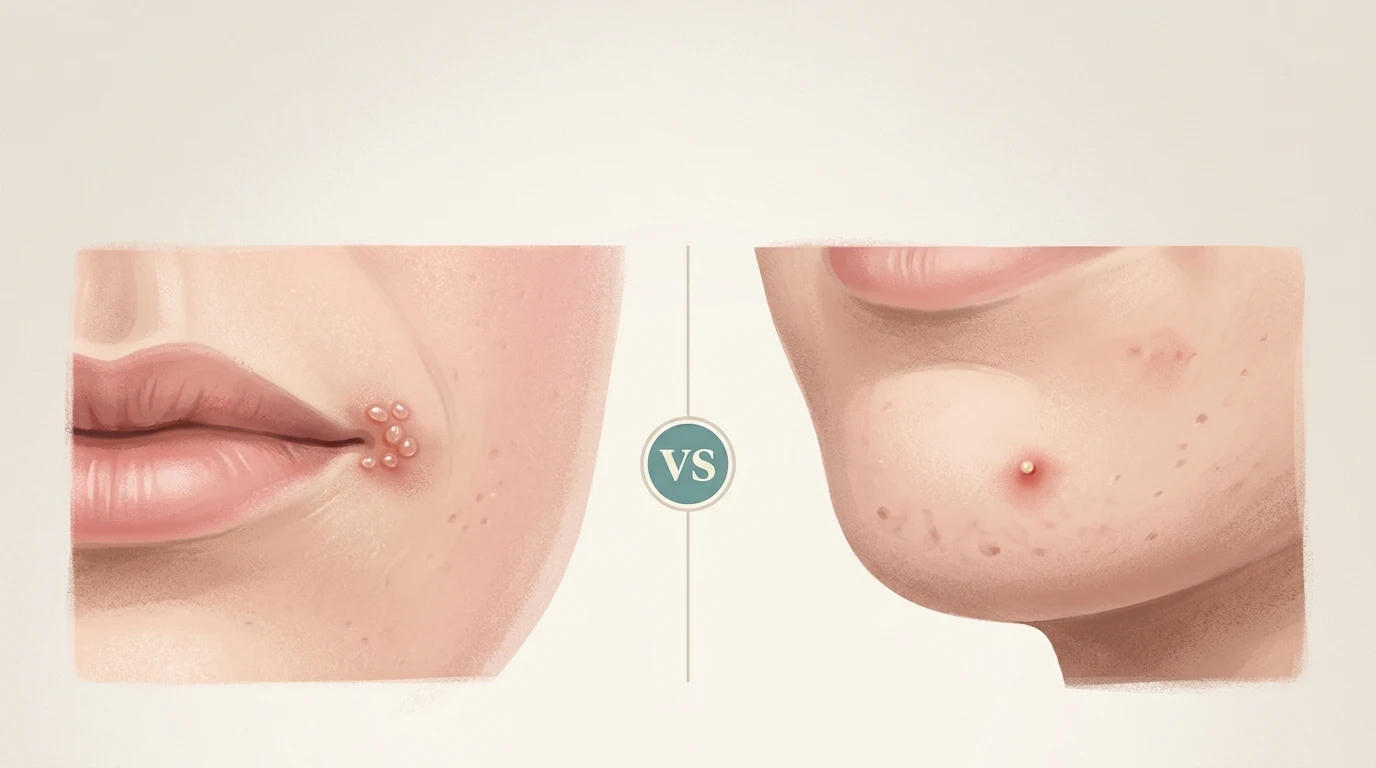
- Blisters in a group. A cold sore is often a cluster of tiny blisters. A pimple is usually one bump.
- Location. Cold sores form on or right next to the lips. Pimples can show up anywhere on the face, including the chin, nose, and forehead.
- Crust. A cold sore weeps fluid, then forms a yellow brown crust. A pimple may have a white or yellow center, called a head.
- Contagious? A cold sore spreads by close contact, such as kissing. A pimple does not spread.
Example: A single red bump on your chin with a white tip is likely a pimple. A cluster of small blisters on the edge of your lip, after a day of tingling, is likely a cold sore.
The Origin of “Cold Sore” and “Pimple”
Words can explain a lot. Let’s look at each one.
Cold sore. The name does not mean you have a cold. It means the sore often shows up when you are sick or run down, such as with a cold or fever. For many years, people noticed the sores appeared with colds. So the name stuck. The cause is the herpes simplex virus (HSV-1), which stays in your body after the first infection.
Fever blister. This is another name for the same thing. It also points to the link with being sick.
Pimple. This word is older. It goes back to Middle English. It likely comes from an old word for a small swelling or bump. The meaning has stayed close to the same for hundreds of years.
Why do the names differ? Language changes by place. Different regions picked different words for the same skin problem. That is why you hear “spot” in one country and “pimple” in another. (More on that next.)
British English vs American English Spelling and Terms
The spelling of “cold sore” and “pimple” is the same in both British and American English. The difference is in which word people choose.
| Meaning | American English | British English |
| Blister near the lip from HSV-1 | cold sore, fever blister | cold sore |
| Small red bump from a clogged pore | pimple, zit | spot, pimple |
| Many pimples | acne, breakouts | acne, spots, breakouts |
| Pimple (casual) | zit | zit, spot |
| Medical term | herpes labialis | herpes labialis |
Key point: In the UK, “spot” is the everyday word for a pimple. In the US, “pimple” and “zit” are more common. “Fever blister” is used in the US but is rare in the UK.
Which Spelling and Word Should You Use?
It depends on who is reading.
- US audience: Use “cold sore” or “fever blister,” and “pimple” or “zit.” In a medical or formal setting, “pimple” is the safest choice.
- UK and Commonwealth audience: Use “cold sore” and “spot.” “Pimple” is also understood and is fine in writing.
- Global audience: Use “cold sore” and “pimple.” Both are widely known. You can add “(also called a spot in the UK)” for clarity.
- Medical writing: Use “herpes labialis” for cold sores and “acne vulgaris” or “papule” for pimples. Then explain in plain words.
Tip: If you are not sure, pick the plain word and add a short explanation.
Common Mistakes with “Cold Sore or Pimple”
Mistake 1: Popping a cold sore.
This can spread the virus and slow healing. Leave it alone.
Mistake 2: Thinking a cold sore means poor hygiene.
Not true. Most adults carry HSV-1. It is very common.
Mistake 3: Using acne cream on a cold sore.
Acne products dry out skin and can sting. They do not fight the virus.
Mistake 4: Kissing or sharing items during an outbreak.
Cold sores spread easily. Avoid kissing, shared cups, towels, and lip balm.
Mistake 5: Assuming every lip bump is a cold sore.
Pimples can form near the lips too. Look for tingling, clusters, and crusting.
Mistake 6: Waiting too long.
If a sore does not heal in two weeks, see a doctor.
“Cold Sore or Pimple” in Everyday Examples
In a text message:
“Ugh, I woke up with a bump on my lip. Cold sore or pimple? It’s so sore.”
In an email to a coworker:
“I’ll be working from home today. I may have a cold sore, so I’d rather not risk spreading it.”
On social media:
“Day 3 of this cold sore. Please tell me it’s a pimple. 😩”
In a news or health article:
“Experts say most people can tell a cold sore from a pimple by looking for tingling, clustered blisters, and crusting.”
In formal or medical writing:
“Patients presenting with perioral lesions should be assessed to distinguish herpes labialis from acne.”
Google Trends & Usage Data
I can’t pull live Google Trends numbers here, so I won’t invent any. You can check current data for free at trends.google.com. Here is what to expect and how to read it.
- Where it is popular: Searches for skin terms are common in English-speaking countries such as the US, UK, Canada, Australia, and India.
- Word choice by country: Expect “pimple” and “zit” to lead in the US, and “spot” to rise in the UK and Ireland.
- When it spikes: People often search more during cold and flu season, in dry winter weather, after sun exposure, and during stressful times. These are common cold sore triggers.
- Why it matters for writers: Match your word to your audience’s region to reach more readers.
Tip: In Google Trends, compare “cold sore,” “pimple,” “spot on lip,” and “fever blister” side by side, and filter by country.
Comparison Table: Cold Sore vs Pimple
| Feature | Cold Sore | Pimple |
| Cause | Herpes simplex virus (HSV-1) | Clogged pore, oil, bacteria |
| First sign | Tingling, burning, itching | Redness, small bump |
| Look | Cluster of small blisters | Single bump, often with a white head |
| Common spot | On or around the lips | Anywhere on the face and body |
| Pain | Sore, tender | Mild to sore |
| Contagious | Yes | No |
| Crusting | Yes, yellow-brown | Rarely |
| Healing time | 7–10 days | A few days to a week or more |
| Common care | Antiviral cream or pills | Benzoyl peroxide, salicylic acid |
| Can it return in the same place? | Yes, often | Sometimes |
FAQs
1. How can I tell a cold sore from a pimple quickly?
Look for tingling before the bump, a cluster of small blisters, and crusting. A pimple is usually a single bump with a white head.
2. Is a cold sore contagious?
Yes. It spreads by kissing, sharing cups, or touching the sore. It is most contagious when blisters are open and weeping.
3. Can I pop a cold sore like a pimple?
No. Popping it can spread the virus and cause scarring or infection. Keep it clean and let it heal.
4. How long does a cold sore last compared to a pimple?
A cold sore usually lasts 7 to 10 days. A pimple can clear in a few days to a week or two.
5. What helps a cold sore heal faster?
Antiviral creams or pills work best when started at the first tingle. A doctor or pharmacist can advise you.
6. What is the best treatment for a pimple?
Gentle washing and products with benzoyl peroxide or salicylic acid. Do not pick or squeeze.
7. When should I see a doctor?
See one if the sore lasts more than two weeks, is near your eyes, keeps coming back, is very painful, or if your immune system is weak. Also go if you are unsure what it is.
8. Can stress cause a cold sore or a pimple?
Stress can trigger both. It can wake up the virus behind cold sores and boost oil that leads to pimples.
Conclusion
So, cold sore or pimple? The answer comes down to a few clear signs.
A cold sore is caused by a virus. It often starts with tingling, forms a cluster of blisters near the lips, and crusts over. It spreads to others, so be careful with kissing and sharing items. A pimple comes from a clogged pore. It is usually a single bump, can show up anywhere, and does not spread.
Remember these key points:
- Tingling and clusters point to a cold sore.
- A single bump with a white head points to a pimple.
- Never pop a cold sore.
- Use antivirals for cold sores and acne products for pimples.
- Match your word to your reader: “spot” in the UK, “pimple” or “zit” in the US.
When in doubt, ask a pharmacist or doctor. They can tell you for sure and suggest the right care. Knowing the difference saves you time, protects the people around you, and helps your skin heal faster.

I am content creator and comparison blogger focused on analyzing key differences between terms, concepts, and ideas to deliver accurate, easy-to-understand information. So I decided to create a platform where these differences are explained in the simplest way possible.