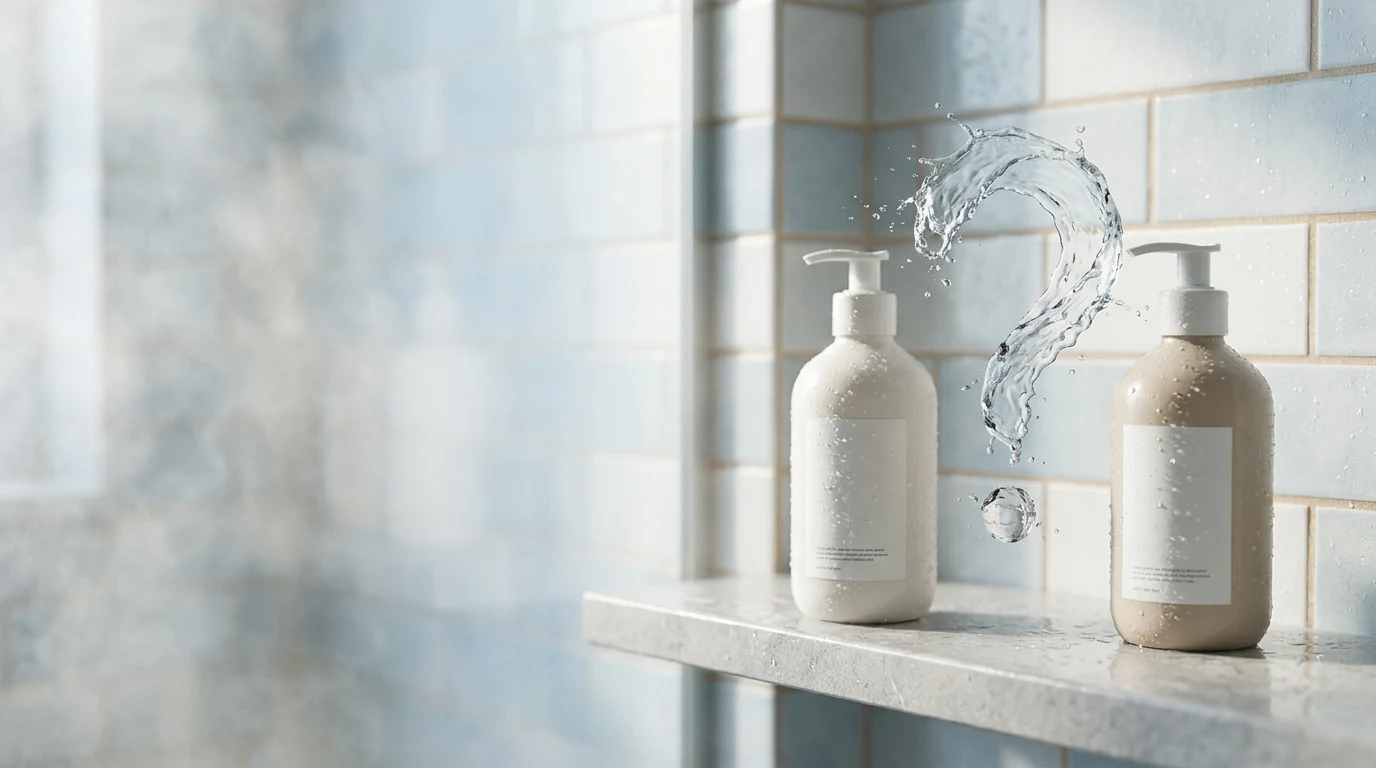
Picture this. You are in the shower. Two bottles sit on the shelf. You pause. Which one goes first?
It sounds like a small thing. But many people search for shampoo or conditioner first because they want clean, soft, healthy hair, and they do not want to waste product or time. Some have heard of “reverse washing.” Others have seen a friend do it the other way and wonder who is right.
This guide clears up the confusion. You will get a quick answer first. Then you will learn where the words come from, how the terms differ between British and American English, and which mistakes to avoid. You will also see real examples, usage trends, and answers to common questions.
By the end, you will know the right order for your hair type. You will also know the few cases where you can break the rule. Let’s start with the short answer.
Quick Answer
Shampoo first. Conditioner second.
That is the standard order for most people. Here is why:
- Shampoo cleans. It removes oil, sweat, dirt, and product buildup from your scalp and hair.
- Conditioner smooths and softens. It coats the hair to reduce frizz and tangles.
If you use conditioner first, the shampoo may wash it away. You lose the benefit.
Simple examples:
- Normal or thick hair: shampoo, rinse, then conditioner on the lengths.
- Dry or curly hair: shampoo the scalp, then use conditioner on the lengths and ends.
- Fine or oily hair: shampoo first is still best. Some people try “reverse washing” (conditioner first) if their hair gets weighed down. It is an exception, not the rule.
The Origin of “Shampoo” and “Conditioner”
The word shampoo comes from the Hindi word chāmpo. It means to press or knead. Long ago, it described a head and body massage in India. The word entered English in the 1700s and first meant massage.
Later, the meaning moved to washing hair. In the 1800s, Sake Dean Mahomed, an Indian entrepreneur in Britain, became known for “shampooing” baths in Brighton. This helped the word spread.
The word conditioner is newer in hair care. It comes from “condition,” meaning to put something in good shape. Hair conditioners became common in the 1900s, when people wanted softer, easier-to-comb hair.
Why do spelling differences exist? For these two words, they mostly do not. “Shampoo” and “conditioner” are spelled the same in the UK and the US. Old spellings such as “shampooing” and “champoo” faded over time. The real differences are in the terms around them, which the next section covers.
British English vs American English Wording
Good news: the main keywords share one spelling. But some related words and habits differ.
| Term | American English | British English |
| Hair wash product | shampoo | shampoo |
| Hair softener | conditioner | conditioner |
| Leave-on product | leave-in conditioner | leave-in conditioner |
| Hair salon | hair salon / beauty salon | hairdresser’s / hair salon |
| Hair stylist | hairstylist | hairdresser |
| Hair dryer | hair dryer | hairdryer / hair dryer |
| Rinse | rinse | rinse |
| Colour-treated hair | color-treated hair | colour-treated hair |
| Dandruff product | anti-dandruff shampoo | anti-dandruff shampoo |
Spelling rule to remember: Americans write “color.” The British write “colour.” This matters when you search for “shampoo for colour-treated hair” or “color-safe conditioner.”
Which Spelling (and Wording) Should You Use?
- US audience: Use “color,” “hairstylist,” and “hair dryer.”
- UK and Commonwealth audience: Use “colour,” “hairdresser,” and “hairdryer.”
- Global audience: Keep it simple. Use “shampoo” and “conditioner,” which are the same everywhere. Pick one style for the rest and stay consistent.
The order of use is the same in every country: shampoo first, conditioner second.
Common Mistakes with Shampoo and Conditioner Order
Mistake 1: Putting conditioner on the scalp.
Fix: Apply it from the mid-lengths to the ends. Oily scalps can feel greasy otherwise.
Mistake 2: Using too much shampoo.
Fix: A coin-sized amount is enough for most hair. Massage the scalp, not the lengths.
Mistake 3: Rinsing conditioner too fast.
Fix: Leave it on for the time on the label, often one to three minutes.
Mistake 4: Using conditioner first without a reason.
Fix: Do this only if your hair is fine and gets weighed down, and see how it feels.
Mistake 5: Washing every day when your hair does not need it.
Fix: Many people do fine washing a few times a week. Dry or curly hair often needs less.
Mistake 6: Skipping the rinse.
Fix: Rinse shampoo fully before you condition.
Shampoo or Conditioner First in Everyday Examples
In an email to a friend:
“Quick tip: shampoo or conditioner first? Shampoo first, then conditioner. It works better.”
In a news or magazine headline:
“Hair experts explain if it’s shampoo or conditioner first.”
On social media:
“Reverse washing: conditioner first, then shampoo? I tried it for a week. Here’s what happened.”
In formal or product writing:
“For best results, apply shampoo to wet hair, rinse thoroughly, and then apply conditioner to the lengths and ends.”
In a salon:
“Your stylist will usually shampoo first, then condition, and then style.”
Google Trends & Usage Data
I do not have live Google Trends figures, so I will not invent numbers. You can check the current data yourself at trends.google.com. Here is what to look for:
- Seasonal spikes: Hair-care questions often rise around holidays, summer (sun, chlorine, and salt water), and new-year routine resets.
- Social media effect: Interest often jumps when “reverse washing” or hair-care trends go viral.
- By country: Search interest tends to be strongest in English-speaking countries such as the US, UK, Canada, Australia, and India. Phrasing may change by region.
- Some people search “condition before shampoo,” “hair washing order,” or “reverse hair washing.”
- By context: Most searches are practical, such as “what order should I wash my hair?” Others come from curious readers who saw a trend online.
Keyword variations side by side:
| Keyword variation | Main intent | Best answer |
| shampoo or conditioner first | Which goes first? | Shampoo first |
| conditioner before shampoo | Is reverse washing okay? | Possible for fine, oily hair |
| do you shampoo or condition first | Order of steps | Shampoo, then condition |
| shampoo then conditioner | Confirming routine | Yes, standard method |
| reverse hair washing | Trend curiosity | Works for some, not required |
| hair wash order | General routine | Shampoo, rinse, condition, rinse |
FAQs
1. Should I use shampoo or conditioner first?
Shampoo first, then conditioner. This works for most hair types.
2. Can I use conditioner before shampoo?
Yes. This is called reverse washing. It can help fine or oily hair feel lighter. Try it and see.
3. Do I need conditioner every time I wash?
Not always. Dry, curly, or damaged hair usually benefits from it every wash. Very oily hair may need it less often.
4. Should I put conditioner on my scalp?
Usually no. Focus on the middle and ends of your hair.
5. How long should I leave conditioner in?
Follow the label. It is often one to three minutes.
6. Is “shampoo” spelled differently in the UK and the US?
No. It is spelled “shampoo” in both. Differences appear in words like “color” and “colour.”
7. Does the order change for curly hair?
The order stays the same. But curly hair often needs more conditioner and gentler shampooing, and some people “co-wash” (wash with conditioner only) between shampoo days.
Conclusion
So, shampoo or conditioner first? The answer is simple: shampoo first, conditioner second. Shampoo cleans away oil and dirt. Conditioner then softens and protects. Reverse the order and the shampoo can strip away the conditioner’s work.
There are exceptions. Fine or oily hair that feels heavy may like reverse washing. Curly hair may enjoy co-washing. These are choices, not rules. Try one change at a time and see how your hair feels.
You also learned that “shampoo” comes from the Hindi chāmpo, meaning to press or knead. The word is spelled the same in British and American English. The small differences are in nearby words, such as “color” and “colour,” and “hairdresser” and “hairstylist.”
Remember these quick tips:
- Shampoo the scalp. Condition the ends.
- Use small amounts.
- Rinse well after each step.
- Wash only as often as your hair needs.
With these steps, you can end the shower-shelf debate and enjoy cleaner, softer hair.

I am content creator and comparison blogger focused on analyzing key differences between terms, concepts, and ideas to deliver accurate, easy-to-understand information. So I decided to create a platform where these differences are explained in the simplest way possible.