You are typing an email. You stop. Is it “recieve” or “receive”? Both look right, and now you are not sure.
You are not alone. This is one of the most common spelling doubts in English. Writers, students, and workers all ask the same thing: which one is correct?
People search for this because the two spellings look alike. The letters are the same. Only the order of “i” and “e” changes. Spell checkers can catch it, but not always. Sometimes you want to know why.
There is also a second worry. Some people think one spelling is British and one is American. That is not true. This guide clears up that confusion.
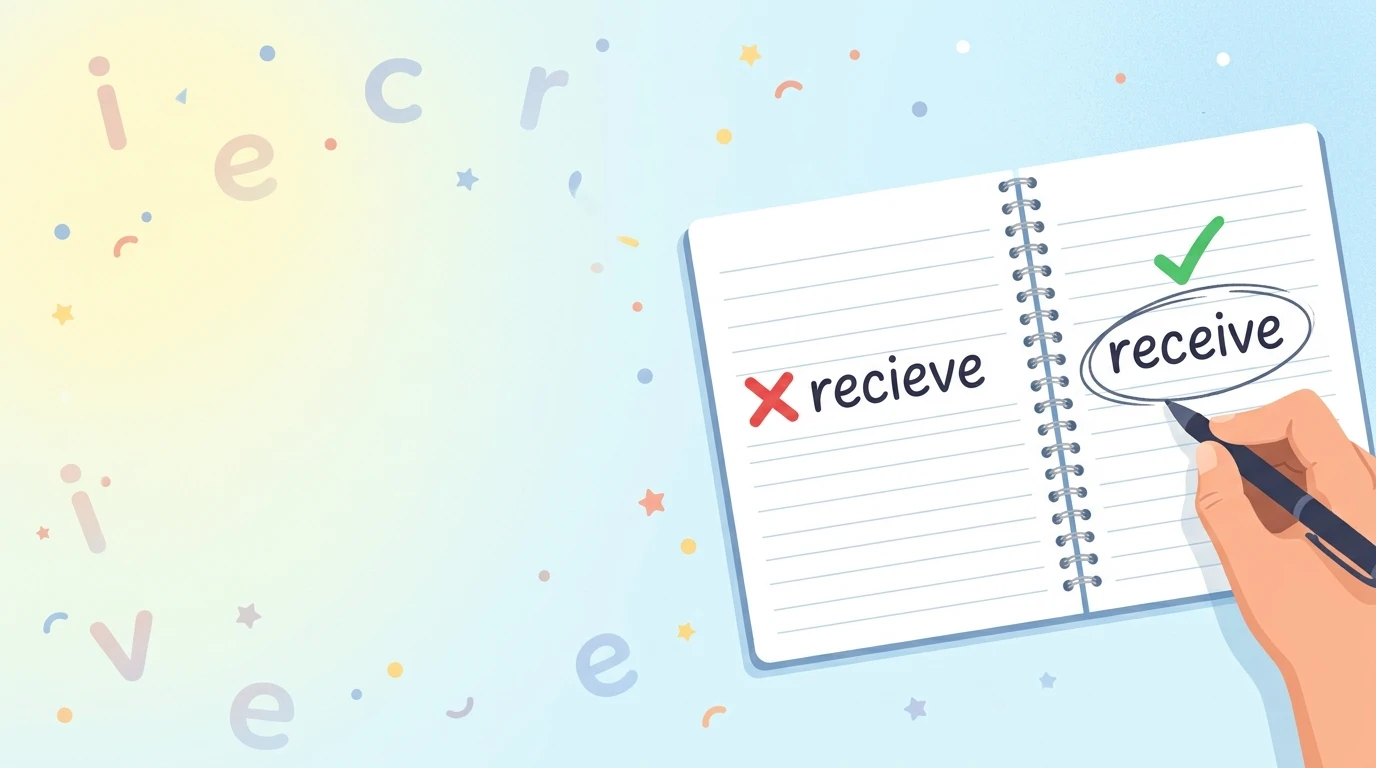
Here is the short answer. “Receive” is correct. “Recieve” is a typo. It is wrong in every English-speaking country.
Below, you will find the history, simple rules, real examples, usage notes, and FAQs. By the end, you will never doubt this word again.
Quick Answer
Receive is the correct spelling. Recieve is a common mistake.
“Receive” means to get something. Someone gives, and you receive.
Examples:
- I will receive your package on Monday.
- Did you receive my email?
- She hopes to receive an award.
Wrong:
- I did not recieve your message.
Easy memory trick: “I before E, except after C.” The letter before the “e” in “receive” is C. So the order is c-e-i.
The Origin of Receive
“Receive” came into English from Old French. The French word came from the Latin recipere. That word has two parts: re- (back) and capere (to take). So “receive” first meant “to take back” or “to take in.”
English borrowed the word in the Middle Ages. Back then, spelling was loose. People wrote words many ways. You can find old forms like “receyve” and “receiven.”
Spelling became more fixed after printing presses arrived. Later, dictionaries made it firmer. Samuel Johnson’s dictionary in 1755 helped in Britain. Noah Webster’s dictionary in 1828 helped in the United States.
So why do people still mix it up? English borrows from many languages. Its spelling rules often have exceptions. The “i before e” rule works in many words, such as believe and field. It fails in others. The brain gets confused, and “recieve” looks natural.
British English vs American English Spelling
Here is the good news. There is no British or American difference for “receive.” Both use the same spelling.
Britain and the US do spell some words differently. These are the usual patterns:
| Rule | American English | British English |
| or / our | color | colour |
| er / re | center | centre |
| ize / ise | organize | organise |
| yze / yse | analyze | analyse |
| l / ll | traveling | travelling |
| c e i words | receive | receive |
Notice the last row. It is the same on both sides of the ocean. “Recieve” is not a “variant.” It is simply an error.
Which Spelling Should You Use?
Use receive. Always.
- US audience: Use “receive.”
- UK and Commonwealth audience (Australia, Canada, India, Singapore, and others): Use “receive.”
- Global audience: Use “receive.”
There is no case where “recieve” is right. This holds for emails, school papers, websites, and resumes.
If you want to pick a style for other words, choose one and stay with it. For example, do not write “color” and “colour” in the same document. But for this word, you have no choice to make.
Common Mistakes with Receive
Here are the errors people make most.
| Wrong | Right | Tip |
| recieve | receive | C comes before E, then I |
| recieved | received | Same rule applies |
| recieving | receiving | Same rule applies |
| reciept | receipt | Also c-e-i |
| reciever | receiver | Also c-e-i |
| recive | receive | Do not drop the “e” |
Other words that follow the same rule: ceiling, deceive, perceive, conceive.
Words that break the “i before e” rule: weird, seize, either, neither, protein, caffeine.
A fast fix: say the word slowly as “re CEIVE.” Hear the “see” sound? C is followed by “ei.”
Receive in Everyday Examples
Email:
- “Please confirm you received the file.”
- “We will receive the shipment on Friday.”
News:
- “Thousands received aid after the storm.”
- “The team will receive the trophy tonight.”
Social media:
- “So happy to receive this gift! 💛”
- “Did anyone else receive the update?”
Formal writing:
- “The applicant will receive written notice within 30 days.”
- “Students who pass will receive a certificate.”
Google Trends & Usage Data
Search interest in this topic is steady. People ask about it all year. Interest often rises in September and January. That is when school and work start again, and more people write emails and essays.
What the data usually shows:
- By country: Searches come from English-speaking countries such as the US, UK, Canada, Australia, and India. English learners add to the numbers worldwide.
- By context: People search “recieve or receive” when they write emails, resumes, essays, and posts.
- Related searches: “received,” “receive vs recieve,” and “receipt spelling” rise along with it.
For live, exact numbers, open Google Trends. Compare “recieve” and “receive” in your own country and date range. Results change over time.
Side by side comparison:
| Form | Correct? | Part of speech | Example |
| receive | ✅ Yes | Verb | I receive mail daily. |
| recieve | ❌ No | Typo | — |
| received | ✅ Yes | Past tense | I received it. |
| receiving | ✅ Yes | Present participle | She is receiving help. |
| receipt | ✅ Yes | Noun | Keep your receipt. |
| receiver | ✅ Yes | Noun | The receiver caught the ball. |
FAQs
1. Is it “recieve” or “receive”?
It is “receive.” “Recieve” is a spelling mistake.
2. Is “recieve” a British spelling?
No. Britain uses “receive” too.
3. What is the rule for “receive”?
Use “i before e, except after c.” After C, the order is “ei.”
4. Why do people spell it “recieve”?
The “ie” pattern is common in English, as in believe and friend. People apply it by habit.
5. Is “received” spelled the same way?
Yes. It is “received,” with “ei” after the C.
6. How do I spell the noun, “receipt”?
Write “receipt.” The “p” is silent, and the “ei” order stays the same.
7. Does spell check catch this error?
Usually yes. But it can miss the error in a hurry or in some apps. Always proofread.
8. What is a quick way to remember it?
Think of the phrase: “Receive the cei(ling) gift.” Or just say: C, then E, then I.
Conclusion
Let us sum it up. “Receive” is the only correct spelling. “Recieve” is a common typo. It is wrong in the US, the UK, and everywhere else.
The word comes from Latin and Old French. Spelling was loose for centuries, and that is one reason English still feels tricky. But there is no British or American split here. Both sides write “receive.”
Remember the old rule: “I before E, except after C.” This word has a C, so “e” comes first. The same goes for received, receiving, receipt, receiver, and deceive.
If you want to stay safe, try these steps:
- Say “re-CEIVE” in your head.
- Look for the C before “ei.”
- Proofread before you send.
- Use a spell checker as backup, not as your only guard.
Good spelling builds trust. A small slip can make a great email look rushed. Now you know the right answer, and you know why. You can write “receive” with total confidence.

I am content creator and comparison blogger focused on analyzing key differences between terms, concepts, and ideas to deliver accurate, easy-to-understand information. So I decided to create a platform where these differences are explained in the simplest way possible.