You are typing fast. You write a word. It looks wrong. Is it “lable” or “label”? You stop and search. You are not alone. Many people ask this every month. The word is common. We see it on food, boxes, clothes, and apps. So spelling it right matters.
People search this keyword for two reasons. First, they want to check the spelling. Second, they have seen “labelled” and “labeled” and feel lost. Why two forms? Which one is right?
This article clears it up. You get the quick answer first. Then you learn where the word came from. You see how British and American spelling differ. You also get examples, common mistakes, usage notes, and a short FAQ.
No grammar degree needed. We keep it simple. Spelling slips can make a good message look careless. By the end, you will know what to write. You will also know which version fits your reader. Let’s start.
Quick Answer
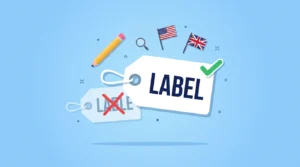
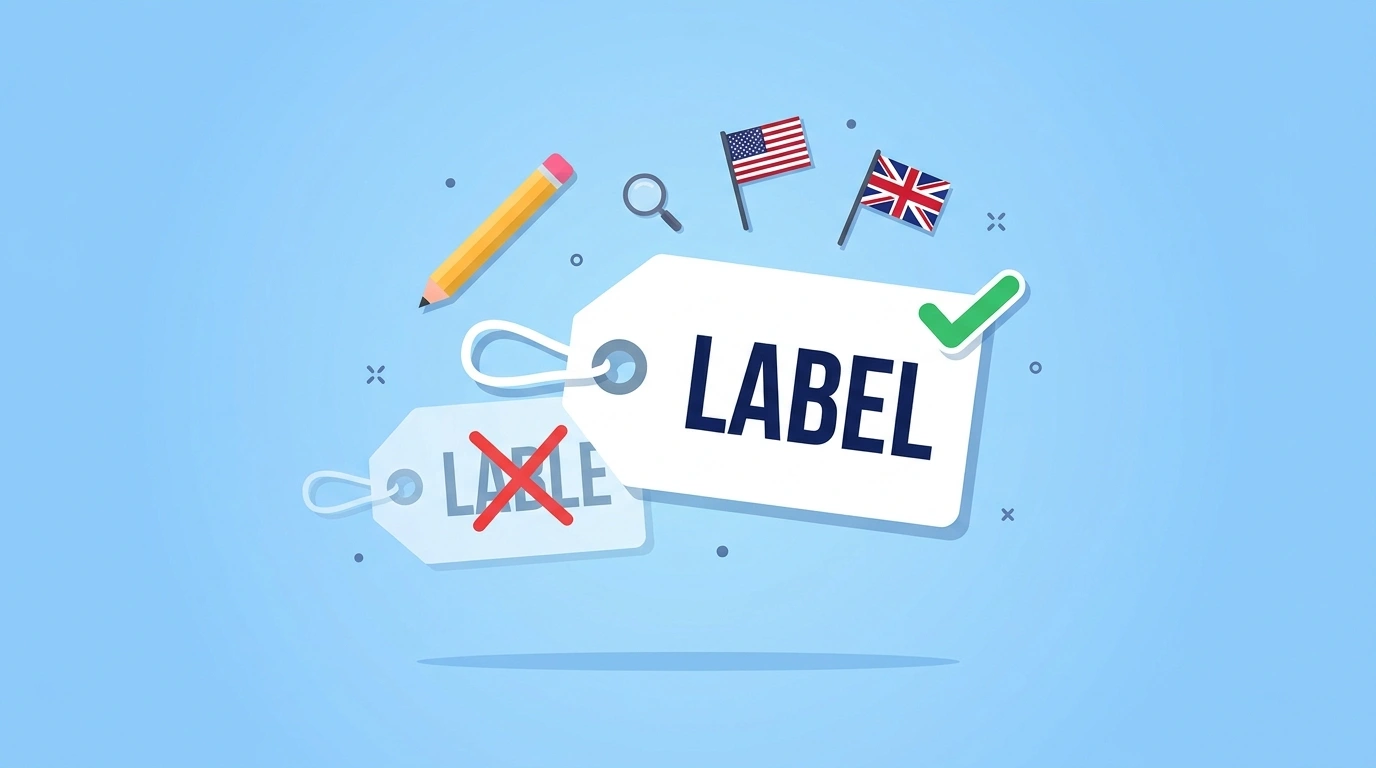
“Label” is the correct spelling. “Lable” is a typo. It swaps the last two letters.
- ✅ Please put a label on the box.
- ❌ Please put a lable on the box.
The word has five letters: L-A-B-E-L. It starts and ends with L.
A small trick helps: the word has an “L” at each end, like a tag with two edges. Remember “L at both ends.”
The Origin of Label
The word “label” is old. People used strips to hold seals on legal papers.
Over time, the meaning grew. A label became any small tag that tells you what something is. Today it can be paper, plastic, or even digital, like a label in an email app.
Why do spelling differences exist? The base word never changed. The change came later, when people added endings like ed and ing. British and American writers handled those endings in different ways.
In the early 1800s, Noah Webster pushed for simpler spelling in America. His dictionary helped make “labeled” the US standard. Britain kept the double L.
British English vs American English Spelling
The word “label” is the same in both. The difference shows up when you add endings.
British English often doubles the final L. American English usually does not.
| Form | British English | American English |
| Noun / base verb | label | label |
| Past tense | labelled | labeled |
| ing form | labelling | labeling |
| Person who labels | labeller | labeler |
The same pattern appears in other words:
| British | American |
| travelled | traveled |
| cancelled | canceled |
| modelling | modeling |
| fuelled | fueled |
Once you learn this rule, many words get easier.
Which Spelling Should You Use?
Think about your reader.
- Writing for the US: Use labeled and labeling.
- Writing for the UK, Australia, India, or most Commonwealth countries: Use labelled and labelling.
- Writing for a global audience: Pick one style. Use it everywhere. Many global brands choose US spelling, but either is fine.
Pro tip: Set your spell checker to the right language. Choose English (US) or English (UK). It will catch the difference for you.
Note that Canada mixes both styles. If you write for Canadians, check what your own company or style guide says.
Common Mistakes with Label
Here are the errors people make most.
| Mistake | Fix | Why |
| lable | label | Letters are swapped |
| labell | label | Extra L on the base word |
| labled | labeled / labelled | Missing E; also a swap error |
| labeld | labeled / labelled | Missing a letter |
| labelling in a US email | labeling | Wrong style for the audience |
| Mixing both styles in one text | Pick one | Looks careless |
The biggest mistake is not the typo. It is mixing styles. Do not write “labelled” in one line and “labeling” in the next.
Label in Everyday Examples
In an email:
“Please label each folder before you send them.”
In the news:
“The company was labelled a leader in green energy.” (UK style)
“The group was labeled a threat by the report.” (US style)
On social media:
“Don’t label people. Get to know them first.”
In formal writing:
“All samples must be clearly labeled with the date and time.”
On a product:
“Check the nutrition label before you buy.”
In tech:
“Add a label to your email so you can find it later.”
Google Trends & Usage Data
I can’t pull live Google Trends numbers in this chat. So I won’t invent any. Here is what you can expect to see, and how to check it yourself.
- “Label” is the top search by far. It is the standard word everywhere.
- “Labeled” tends to lead in the United States.
- “Labelled” tends to lead in the UK, Australia, India, and other Commonwealth countries.
- “Lable” shows up as a typo search. People type it when they are unsure.
- Search often rises in school and work seasons, when people write more.
How to check: Go to trends.google.com. Enter “labeled” and “labelled.” Choose “Compare.” Set the region to the US, then to the UK. You will see the split clearly.
| Variation | Status | Where it is common |
| label | Correct | Everywhere |
| labeled | Correct | US |
| labelled | Correct | UK, Commonwealth |
| labeling | Correct | US |
| labelling | Correct | UK, Commonwealth |
| lable | Wrong | Typo only |
| labell | Wrong | Typo only |
FAQs
1. Is it “lable” or “label”?
It is “label.” “Lable” is a misspelling.
2. Are “labelled” and “labeled” both correct?
Yes. “Labelled” is British. “Labeled” is American.
3. Which one is right for Canada?
Both are in use. Canadian writers often lean British on this word, but check your style guide.
4. Is “labeling” or “labelling” correct?
Both. Use “labeling” for US readers. Use “labelling” for UK readers.
5. Why does British English double the L?
British spelling tends to double a final consonant when adding an ending. American spelling dropped the extra letter to keep words simple.
6. Does a spell checker catch “lable”?
Yes, most do. But always read your text once more. Tools can miss errors.
7. Can I use both spellings in one document?
No. Pick one style and keep it the same from start to end.
8. Is “label” a noun or a verb?
Both. “Read the label” is a noun. “Label the box” is a verb.
Conclusion
Here is the short version. The correct spelling is “label.” “Lable” is a typo. It swaps two letters. Spell checkers will flag it, but only if you let them.
The longer part is about “labelled” and “labeled.” Both are right. British English, and most Commonwealth countries, use “labelled” and “labelling.” American English uses “labeled” and “labeling.” The base word “label” does not change. Only the extra endings change.
So how do you choose? Think about your reader. Writing for the US? Use one L. Writing for the UK, Australia, or India? Use two Ls. Writing for the whole world? Pick one style and stay with it. Consistency matters more than which side you pick.
Before you hit send, do a quick check. Match one L or two Ls to your reader. Run a spell check set to the right language. These small steps keep your writing sharp.
Now you know the answer. Write with confidence.

I am content creator and comparison blogger focused on analyzing key differences between terms, concepts, and ideas to deliver accurate, easy-to-understand information. So I decided to create a platform where these differences are explained in the simplest way possible.