You look in the mirror. There is a bump near your lip. It hurts. It looks red. Now you wonder: is it a pimple or a cold sore?
You are not alone. Every day, many people search “pimple or cold sore.” They want a fast answer. Why? The two bumps can look alike, but they are not the same. One is a clogged pore. The other is caused by a virus. You treat them in different ways. And only one can spread to other people.
This causes real confusion. Some people pop a cold sore by mistake. Others put acne cream on a blister and make it worse. Some worry for days over a simple pimple.
This guide clears it up. You will get a quick answer first. Then you will learn where the words come from, how the US and UK name these bumps, common mistakes, and real-life examples. We also answer your top questions. Let’s start.
Quick Answer
A pimple is a clogged pore.
A cold sore is a small, painful blister.
| Sign | Pimple | Cold Sore |
| Cause | Clogged pore, oil, bacteria | Herpes simplex virus |
| Early feeling | Sore bump | Tingling, itching, or burning |
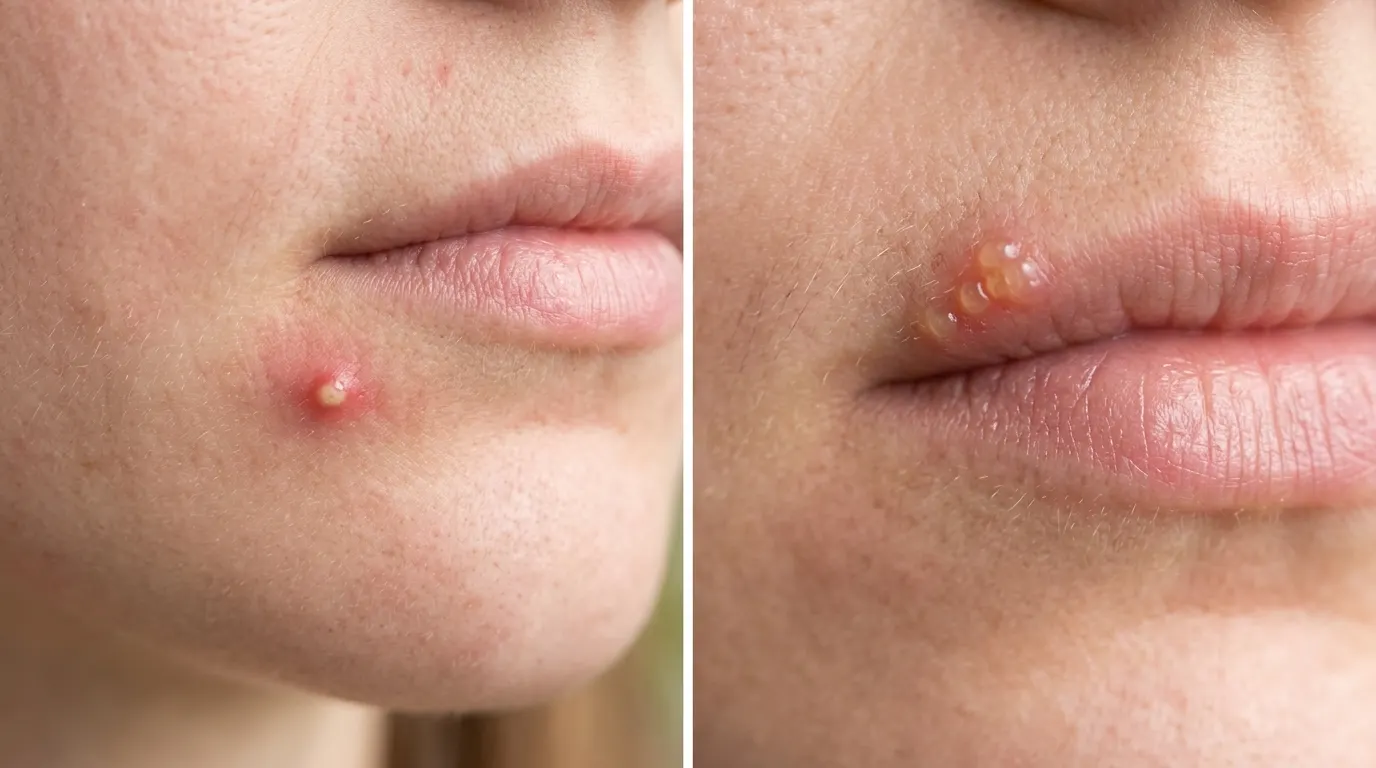
| Look | Single bump, white or black head | Group of small blisters |
| Later stage | May stay a bump | Blisters break, weep, then crust |
| Location | Anywhere on the face | On or near the lips |
| Contagious? | No | Yes |
| Heals in | A few days to a week | About 7 to 10 days |
Example: You feel tingling on your lip for a day. Then small blisters appear. That is likely a cold sore. You see one round bump with a white tip on your chin. That is likely a pimple.
The Origin of “Pimple” and “Cold Sore”
Pimple. The word is old. It first appeared in English hundreds of years ago. Its exact roots are unclear. Many experts link it to the Latin word papula, which means a small swelling.
Cold sore. The name does not mean the sore comes from cold weather. In the past, people noticed these sores often showed up when they had a cold or a fever. So the name stuck. That is also why some people say fever blister.
Why do names differ? English grew in many places. Each place made its own slang. The US gave us “zit.” The UK often says “spot.” These are not spelling changes. They are different words for the same thing.
British English vs American English Spelling
Here is the simple truth: pimple and cold sore are spelled the same in both US and UK English. There is no “colour vs color” problem here. The difference is in the words people choose.
| Meaning | American English | British English | Spelling Difference? |
| Clogged-pore bump | pimple, zit | spot, pimple | None for “pimple” |
| Lip blister (virus) | cold sore, fever blister | cold sore | None for “cold sore” |
| Sore inside the mouth | canker sore | mouth ulcer | Different words |
| Medical name | herpes labialis | herpes labialis | Same |
Spelling rules to remember:
- “Cold sore” is two words. Do not write “coldsore.”
- “Pimple” has one “m” and ends in “le.”
- “Fever blister” is also two words.
Which Spelling Should You Use?
Your spelling stays the same. Your word choice depends on your readers.
- US readers: Use “pimple” or “zit” for acne bumps. Use “cold sore” or “fever blister” for lip blisters. “Zit” is casual.
- UK and Commonwealth readers: Use “spot” or “pimple.” Use “cold sore.” Use “mouth ulcer” for sores inside the mouth.
- Global readers: Use “pimple” and “cold sore.” These are the most widely understood. Add the medical term “herpes labialis” once if you write for health sites.
Tip: For formal or medical writing, “pimple” and “cold sore” are the safest choices.
Common Mistakes with “Pimple or Cold Sore”
| Mistake | Correction |
| Writing “coldsore” | Write “cold sore” |
| Thinking a cold sore comes from cold weather | It comes from a virus (HSV-1) |
| Popping a cold sore | Don’t. It spreads the virus |
| Using acne cream on a cold sore | Acne cream won’t treat a virus |
| Mixing up cold sores and canker sores | Canker sores form inside the mouth and are not contagious |
| Believing a pimple is contagious | It is not |
| Kissing or sharing cups during a cold sore | Avoid this. It can spread the virus |
| Guessing when unsure | See a doctor or pharmacist |
“Pimple or Cold Sore” in Everyday Examples
Email to a friend:
“I can’t tell if it’s a pimple or a cold sore. It tingles. I’ll skip the hug today, just in case.”
News headline:
“Pimple or cold sore? Doctors explain how to spot the difference.”
Social media post:
“Woke up with a bump on my lip. Pimple or cold sore?? Help 😩”
Formal writing (health site):
“A cold sore is a viral infection. A pimple is a blocked pore. Patients should see a doctor if they are unsure.”
Doctor’s office note:
“Patient reports lip tingling followed by blisters. Likely cold sore.”
Google Trends & Usage Data
I don’t have live search numbers, so I won’t invent any. Here is what search habits usually look like, and how you can check them yourself.
- Why people search: Most searches come from a person with a bump near their lip, who wants a fast answer.
- Seasonal bumps: Cold sores often flare with stress, sun, illness, or a weak immune system. Searches may rise during cold and flu season and sunny holidays.
- By country: English-speaking countries like the US, UK, Canada, Australia, and India search these terms. US users may add “zit” or “fever blister.” UK users may add “spot.”
- How to check: Visit Google Trends. Type “pimple or cold sore.” Compare it with “cold sore vs pimple” and “fever blister.” Filter by country and date.
| Keyword Variation | Likely Searcher | Common Region |
| pimple or cold sore | Wants a quick answer | Global |
| pimple vs cold sore | Wants a comparison | Global |
| cold sore vs pimple | Starts from cold sore worry | Global |
| fever blister vs pimple | Prefers “fever blister” | Mostly US |
| zit or cold sore | Casual wording | Mostly US |
| spot or cold sore | Uses UK slang | UK, Commonwealth |
FAQs
1. How can I tell a pimple from a cold sore fast?
Look for tingling first. A cold sore often tingles or burns before anything shows. It then forms a cluster of small blisters. A pimple is usually one bump with a white or black center.
2. Is a cold sore contagious?
Yes. It spreads by kissing, sharing cups, or touching the sore. It is most contagious when blisters are open.
3. Is a pimple contagious?
No. You cannot catch a pimple from another person.
4. Can a pimple grow on my lip?
Yes, around the edge of the lip. Pimples can show up near the mouth. But a pimple does not usually come with tingling or a group of blisters.
5. Should I pop it?
No. Popping a pimple can cause scars. Popping a cold sore spreads the virus and slows healing.
6. How long does each one last?
A pimple often fades in a few days to a week. A cold sore usually heals in about 7 to 10 days.
7. When should I see a doctor?
See a doctor if you are unsure what it is, if it lasts over two weeks, if it is near your eyes, if you have many sores, or if you have a weak immune system. A doctor or pharmacist can also suggest antiviral treatment for cold sores.
Conclusion
So, is it a pimple or a cold sore? Here is the short version. A pimple is a clogged pore. It is not contagious. A cold sore is a virus. It is contagious. Cold sores often start with tingling and grow into small blisters on or near the lip.
The spelling is easy. “Pimple” and “cold sore” are spelled the same in US and UK English. Only the slang changes. Americans may say “zit” or “fever blister.” Brits may say “spot.” If you write for a global audience, use “pimple” and “cold sore.”
Avoid common mistakes.
If you are not sure, ask a doctor or pharmacist. They can tell you fast and suggest the right care. Clear answers lead to better care and fewer worries. Now you know the signs, so you can look in the mirror with more confidence.
This article is for general information. It is not medical advice.

I am a professional blogger and content writer specializing in synonyms. With a strong focus on research-based writing and clear communication, I creates high-quality content designed to inform, educate, and add long-term value for readers.I am committed to maintaining accuracy, consistency, and professionalism across all published work.