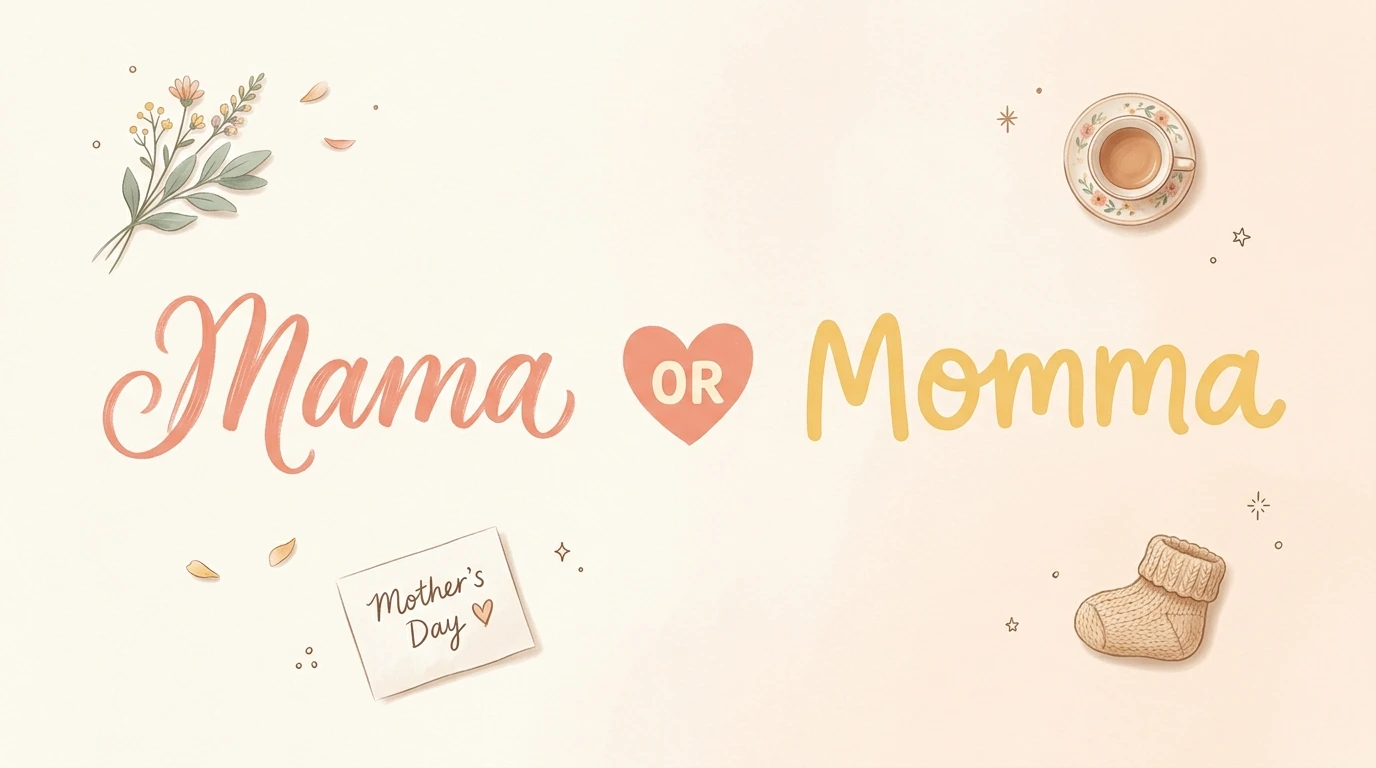
Is it momma or mama? You type the word, stop, and wonder. Both look right. Both are used every day. So which one is correct?
People search for “momma or mama” for many reasons.Others just want to text their mom and not look silly.
Here is the confusion. Both spellings are real words. Both mean “mother.” Dictionaries list both. But they are not used the same way. One feels soft and old-fashioned. The other feels warm and Southern. Where you live also matters.
In this article, you will get a quick answer first. Then you will learn where the words came from, how US and UK writers use them, and which one to
pick. You will also see common mistakes, real examples, usage trends, and answers to common questions. By the end, you will know exactly which spelling fits your needs.
Quick Answer
Both are correct. They mean the same thing: a child’s word for mother.
- Mama is the more common spelling worldwide. It is the safe choice.
- Momma is a common US spelling. It matches how Americans say “mom.”
Examples:
- “Mama, can I have a snack?”
- “Momma made apple pie.”
- “I love you, Mama.”
Rule of thumb: If you are unsure, use mama. If you are writing for an American audience and want a warm, down-home feel, use momma.
The Origin of Momma and Mama
The word “mama” is very old. Babies make the “ma” sound first. It is easy to say. Because of this, many languages have a similar word for mother. Think of “mamá” in Spanish, “maman” in French, and “mama” in Russian. The sound is nearly the same around the world.
English took the word in. Early English writers also used “mamma.” Over time, “mama” became the usual form.
“Momma” came later. It grew in the United States. Americans say “mom,” not “mum.” So the spelling shifted to match that sound. “Momma” is basically “mom” plus a baby-talk ending.
Why do the spellings differ? English has no strict rule for baby words. People wrote them the way they sounded. Different places said them differently, so different spellings stuck.
British English vs American English Spelling
British and American English split on this word. The split is not about “mama” versus “momma” alone. It is about the whole family of mother words.
In the US: People say “mom,” “mommy,” “mama,” and “momma.”
In the UK and Commonwealth: People say “mum,” “mummy,” and “mam.” “Mama” is used too, but “momma” is rare.
| Feature | American English | British English |
| Short form | Mom | Mum |
| Child’s form | Mommy | Mummy |
| Baby-talk form | Mama / Momma | Mama / Mam |
| “Momma” use | Common | Rare |
| “Mama” use | Very common | Common |
| Feel | Warm, casual | Soft, familiar |
Key point: “Momma” matches “mom,” so it fits American English. “Mama” does not match “mum,” so it works in both.
Which Spelling Should You Use?
Pick based on your reader.
Writing for a US audience: Both work. Use “mama” for a gentle tone. Use “momma” for a warm, Southern, or family feel.
Writing for a UK or Commonwealth audience: Use “mum” or “mummy” for the main word. If you need the baby-talk form, use “mama.”
Writing for a global audience: Use “mama.” It is the most widely understood.
Writing for a formal setting: Use “mother.” Neither “mama” nor “momma” is formal.
Tip: Pick one spelling and stick with it. Do not switch in the same piece.
Common Mistakes with Momma or Mama
- Mixing both in one text.
Wrong: “Mama said no, but Momma said yes.”
Fix: Use one spelling each time, unless they are two different people. - Using “mamma” by accident.
This is an older variant and can look like a typo today. Use “mama” instead. - Forgetting capital letters when it is a name.
Wrong: “I called my Mama.”
Fix: “I called Mama.” (Capitalize it as a name. Use lowercase after “my”: “I called my mama.”) - Using “momma” in UK writing.
It may look out of place. Try “mum” or “mama.” - Using either one in formal writing.
Fix: Write “mother” in reports, essays, and business letters. - Mixing up “momma” and “mom.”
“Mom” is the plain short form. “Momma” is the affectionate form.
Momma or Mama in Everyday Examples
Email (casual):
“Hi Mama, I will be home by six. Love, Sam.”
News headline:
“Momma Bear Spotted with Cubs near Trail.” (Headlines often use “momma” for a playful tone.)
Social media:
“Best momma ever! 💛” or “Mama needs coffee.”
Formal writing:
“The mother of the child signed the form.” (Do not use “mama” or “momma” here.)
Children’s books:
“Mama bunny hugged her babies.”
Song titles and lyrics: Both forms appear often because they suit the sound of music.
Momma or Mama Google Trends & Usage Data
I have not pulled live numbers here, so check Google Trends for exact, current figures. Here is the general pattern.
By spelling: “Mama” is usually searched and used more than “momma” across the world.
- In the US, both spellings are popular. “Momma” does best here, especially in Southern states.
- In the UK, “mum” and “mummy” lead. “Mama” shows up more than “momma.”
- In other English-speaking countries, “mama” is the usual pick.
- Interest often rises around Mother’s Day.
- “Momma” often appears in social posts, captions, and humor, such as “momma bear.”
- “Mama” often appears in song titles, baby products, and parenting content.
Tip: Open Google Trends and compare “momma” and “mama” by country and date range to see the latest picture.
Momma vs Mama: Side by Side Comparison
| Variation | Meaning | Where Used | Tone | Safe Choice? |
| Mama | Mother | Worldwide | Soft, loving | Yes |
| Momma | Mother | Mostly US | Warm, casual | Yes, in the US |
| Mamma | Mother | Older, rare | Old-fashioned | No, may look like a typo |
| Mom | Mother | US | Plain, everyday | Yes |
| Mum | Mother | UK, Commonwealth | Plain, everyday | Yes, in the UK |
| Mother | Mother | Everywhere | Formal | Yes, for formal writing |
Frequently Asked Questions
1. Is it momma or mama?
Both are correct. “Mama” is more common worldwide. “Momma” is more common in the US.
2. Is “momma” a real word?
Yes. Major dictionaries list it as a variant of “mama.”
3. Is “mama” more formal than “momma”?
No. Both are casual. For formal writing, use “mother.”
4. Do British people say “momma”?
Rarely. They usually say “mum” or “mummy.” They may say “mama” for baby talk.
5. Should I capitalize mama or momma?
Yes, when you use it as a name: “Mama is home.” Use lowercase after “my”: “my mama.”
6. Which is better for a book title or product name?
“Mama” works for a global audience. “Momma” works well for a US audience and a friendly feel.
7. Is “mamma” correct?
It is an older variant. Most writers use “mama” today.
Conclusion
So, momma or mama? Both are right. They mean the same thing, and neither is a mistake.
Here are the key points to remember. “Mama” is the most common and widely understood spelling. It works almost anywhere. “Momma” is a popular American spelling that matches the way Americans say “mom.” It feels warm and casual. In the UK and Commonwealth, people lean toward “mum” and “mummy,” so “mama” is the better baby-talk choice there.
Match your spelling to your reader. Writing for the world? Use “mama.” Writing for Americans with a cozy tone? “Momma” is fine. Writing something formal? Use “mother.”
Most of all, stay consistent. Choose one spelling and keep it through your whole text. Avoid the older “mamma,” and remember to capitalize the word when it is used as a name.
Now you can write your card, caption, story, or message with confidence.